I just want to make a couple of things clear here, coming up to the election. The purpose of this blog is not to influence anyone's political opinions, nor to endorse any candidate or party. I particularly have not, do not, and will not accept any kind of financial or physical recompense for advertising or endorsing any candidate, party or political position.
My tangential involvement with the Occupy movement is not political. To me, this is a social issue first and foremost - I think that, as a culture, our priorities are messed up. As far as I'm aware the movement itself doesn't have any particular political position anyway, but really my involvement is simply an extension of my day job in trying to do my best for the society that I really do love, particularly here in Ōtautahi who have been struggling over the last year.
So, yeah, given we're a month out from the election now, I will be largely posting only news especially relating to Occupy, not political commentary. Likely I won't have a huge amount of time at the computer either.
If anyone local wants to get in touch with me for any reason, I of course am on Twitter so you can send me a message there (either through @replies or direct message if you're on my follow list), or you can ask me for my mobile number. Otherwise you can email me, I have gmail under thelittlepakeha, or of course leave a comment on any post here.
Showing posts with label aotearoa. Show all posts
Showing posts with label aotearoa. Show all posts
Tuesday, 18 October 2011


Monday, 17 October 2011
Protesters demand to know fate of homes
http://www.stuff.co.nz/the-press/news/christchurch-earthquake-2011/5794234/Protesters-demand-to-know-fate-of-homes (comments enabled)
More than 100 protesters have vented their anger at the Government for the lack of information on the fate of their earthquake-damaged land.
Yesterday, protesters from around the city attended a rally at the Christchurch Botanic Gardens aimed at lobbying the Canterbury Earthquake Recovery Authority for more information on the fate of homes in the orange and white zones.
Owners of about 9000 homes in the orange zone and thousands more in the white zone have been waiting for months to learn whether their damaged land will be repaired or abandoned.
Supporters carried placards calling for clarity and transparency from the Government and Cera.
Rally organiser Darla Hutt, of Spencerville, said the protesters wanted their voices to be heard. "They haven't been heard, pretty much, since day one," she said.
"Out here in Spencerville and Brooklands, we've been waiting for 13 months now. If they can't tell us what's going on, we want to know why."
Labour's earthquake recovery spokesman, Clayton Cosgrove, and Christchurch East MP Lianne Dalziel spoke at the rally. Cosgrove said orange and white-zone residents were sick of having a "moving line", and called on Earthquake Recovery Minister Gerry Brownlee to be "honest".
"Don't set timelines, and don't say things that are going to cause stress, ratchet up expectation and make promises that you have no intention of keeping," he said.
"The clear message we've got from communities is, `Give it to us, warts and all'."
Hutt said Brownlee, Cera chief executive Roger Sutton and the city's National MPs declined to attend the rally.
The group had planned to march to the Arts Centre after being told it did not have Christchurch City Council approval to hold the event, but, despite a police presence, the protest continued at the gardens without incident.
A spokesman for Brownlee said the Government's view was that orange zones were the top priority.
"We said [last week] Cera would give everyone in the orange zone an update within two weeks, so that means that there will be some form of an update by the end of this week."
More than 100 protesters have vented their anger at the Government for the lack of information on the fate of their earthquake-damaged land.
Yesterday, protesters from around the city attended a rally at the Christchurch Botanic Gardens aimed at lobbying the Canterbury Earthquake Recovery Authority for more information on the fate of homes in the orange and white zones.
Owners of about 9000 homes in the orange zone and thousands more in the white zone have been waiting for months to learn whether their damaged land will be repaired or abandoned.
Supporters carried placards calling for clarity and transparency from the Government and Cera.
Rally organiser Darla Hutt, of Spencerville, said the protesters wanted their voices to be heard. "They haven't been heard, pretty much, since day one," she said.
"Out here in Spencerville and Brooklands, we've been waiting for 13 months now. If they can't tell us what's going on, we want to know why."
Labour's earthquake recovery spokesman, Clayton Cosgrove, and Christchurch East MP Lianne Dalziel spoke at the rally. Cosgrove said orange and white-zone residents were sick of having a "moving line", and called on Earthquake Recovery Minister Gerry Brownlee to be "honest".
"Don't set timelines, and don't say things that are going to cause stress, ratchet up expectation and make promises that you have no intention of keeping," he said.
"The clear message we've got from communities is, `Give it to us, warts and all'."
Hutt said Brownlee, Cera chief executive Roger Sutton and the city's National MPs declined to attend the rally.
The group had planned to march to the Arts Centre after being told it did not have Christchurch City Council approval to hold the event, but, despite a police presence, the protest continued at the gardens without incident.
A spokesman for Brownlee said the Government's view was that orange zones were the top priority.
"We said [last week] Cera would give everyone in the orange zone an update within two weeks, so that means that there will be some form of an update by the end of this week."
Parliament under Lock(wood) and Key
I don't have the time to get too involved in this post as I'm taking advantage of some break time at work, but didn't want to wait until I get home tonight to post it.
The rules on what footage can be shown on Parliament tv (among other things) have been tightened. The article states that they've been changed "by MPs" but it seems to have come largely from Lockwood Smith, the Speaker and National party member, as an obvious response to what happened in the House a couple of weeks ago when a man attempted to jump off the balcony.
Under the new rules "ambient sound" and shots of what politicians are doing would be regulated - meaning that John Key's apparent throat-slitting gesture and the shocked reaction from Labour would not have been allowed into the media if the new guidelines had been in place at the time.
This is not an irrelevant detail. This is important. These are our representatives - we need to be able to know how they act when they're not performing for the cameras. Transparency is a vital part of democracy or there can be no informed consent, and this clearly undermines that.
Parliament is our house. We need to be able to see what goes on there - all of it.
The rules on what footage can be shown on Parliament tv (among other things) have been tightened. The article states that they've been changed "by MPs" but it seems to have come largely from Lockwood Smith, the Speaker and National party member, as an obvious response to what happened in the House a couple of weeks ago when a man attempted to jump off the balcony.
Under the new rules "ambient sound" and shots of what politicians are doing would be regulated - meaning that John Key's apparent throat-slitting gesture and the shocked reaction from Labour would not have been allowed into the media if the new guidelines had been in place at the time.
This is not an irrelevant detail. This is important. These are our representatives - we need to be able to know how they act when they're not performing for the cameras. Transparency is a vital part of democracy or there can be no informed consent, and this clearly undermines that.
Parliament is our house. We need to be able to see what goes on there - all of it.
Saturday, 15 October 2011
Occupy

Today, Occupy protests around the world are being held. In New Zealand they've been organised for six cities, including Christchurch, so when the weather turned too dodgy to harvest flax I decided to head down to Hagley Park instead. I turned up shortly after twelve to see a few dozen people there already. We weren't due to march until later, so the first hour or so I was there was basically just drifting around, talking to a few people, looking at the signs people were making, etc. I painted up one of my own to hold during the march - "Dear John..."
After a little while we ended up gathered around as the organisers said a few words and declared open mic, which opened with some words about the dawn raids back in 2007 - coincidentally, on October 15, so it's been four years today. There was a steady stream of people with something to say and I went up to say something that I'm assuming was coherent because I was complimented on it later. It was about herd immunity and how we don't have to rely on a "love your neighbour" justification for equality, because all of society is stronger when everyone has basic healthcare and enough money to live on and education. About halfway through a motion was passed to remember that we all had different political views (and some don't take part in the political system at all) and to officially declare the occupation apolitical. It passed not quite unanimously, but well over 90%.
The next person to take the mic was a guy from ACT.

Honestly I'm not quite sure what his over-riding point was supposed to be, because he kept veering into really political territory, at which point everyone would start heckling him. Eventually he just gave up and some more people spoke, until maybe five minutes later, another guy from ACT on Campus tried to remind us that capitalism is awesome because otherwise we wouldn't have any scientists. He, also, was heckled until he gave up, and shortly afterwards a science student came up to say that very few of his course-mates were in it for money and that if you wanted to make money you probably shouldn't be in science anyway. Shockingly, sometimes people go into a career because they like it, not because they want to be millionaires. I know, weird, right? There was also a little bit of poetry and a few of us sung Nga Iwi E (though I was sitting down and couldn't be bothered hobbling up to the mic for it with the others who knew the words).
Shortly past two we split up into smaller groups. I drifted into the part where people were talking national issues - we covered a few things like affirmative action, inequality, the price of dairy, leading into dairy farming and the ETS, the state of the education system and how it could be improved, staff cuts at Canterbury University, so on and so on. A bit to eat, and then it was time to head down to Riccarton Road, with me clomping along with my cane at a steady clip.

It was hard to see but a few people moving up and down the line reported that it was very long. Obviously we had far fewer people than, say, Auckland, but it was a good turnout so walking down footpaths we looked pretty impressive. We'd been briefed beforehand on how to keep everything legal so we did, in fact, stay on the footpath and off private property. Not only that, we stopped at cross-lights, and when there weren't any we crossed roads in groups. When I was at the front we also were apologising to people walking the other way and trying to make room for them, though I'm not sure what it was like further back. At any rate, it was an incredibly fucking polite protest march. We got quite a lot of response from passing cars, too, which was neat. We ended up heading right down past the mall to a little park that's sort of halfway between Westfields and Church Corner, where we rested for a bit and then started heading back.
When we made it back to Hagley Park it was just past five, and at that point I was exhausted and thirsty (having drunk all my water while walking down the road) and decided to head home. When I left there were still quite a lot of people there settling down to listen to music and chat more.
So, yes, all in all it was a super day. It looked briefly like it was going to be rainy but luckily it cleared up quite quickly and the sun came out for us. I had some great conversations with some very smart, well-educated people, and the number that turned up was really encouraging. There were quite a few kids and dogs, too, and the alcohol and drug free rule was barely an issue because everyone was just really chill. I'm not sure if anyone's planning on staying the night - there's a bylaw about camping in public places - but there were a couple of gazebos and three or so tents set up, and there was discussion of sitting up into the night wrapped in blankets at the very least.
Friday, 14 October 2011
Racism vs Reason
There is a growing sense of anti-Filipino sentiment in the Bay of Plenty after the Rena crashed, sparking our worst maritime environmental disaster.
This is stupid on a number of levels. Most obviously, the idea that the crew are representative of their entire people is utterly ridiculous. If they'd been white, we would not be stewing in anger at all white people, because white people are seen as the default. Further, Filipinos who are already living in the Bay of Plenty have proven themselves as part of the community. They're just as angry about the oil spill as anyone. Why turn on each other? How is that going to help? They didn't come here as the advance guard for some kind of conspiracy that planned for this to happen - especially not those that were born here.
But even beyond these considerations is the awareness that many foreign shipping companies try to cut their costs as much as possible to maximise profit, something that our government tacitly encourages with our incredibly lax regulations. One of those cost-cutting measures involves the crew. Even in the last few months there have been accusations of outright slavery on ships in New Zealand waters. Now clearly none of us know the exact conditions that the Rena's crew were under, but we do know that the disaster was partly caused by adherence to cost-cutting measures. The captain is almost certainly liable, as are a few others. But we have no idea about the rest of the crew. They may have been victims in this themselves.
All of which means, not only are people completely illogically spreading the blame from individuals to a whole nationality, the individuals may not even deserve that blame in the first place.
All this shows, of course, that the culprits here are simply taking advantage of the situation to express latent racism that they already held, whether consciously or not. Likely it wasn't even directed specifically at Filipinos before, just this murky idea of Others, and the Rena incident has lit a spark to that Othering. But it's no more acceptable than it was two weeks ago. These people should be ashamed to call themselves New Zealanders.
This is stupid on a number of levels. Most obviously, the idea that the crew are representative of their entire people is utterly ridiculous. If they'd been white, we would not be stewing in anger at all white people, because white people are seen as the default. Further, Filipinos who are already living in the Bay of Plenty have proven themselves as part of the community. They're just as angry about the oil spill as anyone. Why turn on each other? How is that going to help? They didn't come here as the advance guard for some kind of conspiracy that planned for this to happen - especially not those that were born here.
But even beyond these considerations is the awareness that many foreign shipping companies try to cut their costs as much as possible to maximise profit, something that our government tacitly encourages with our incredibly lax regulations. One of those cost-cutting measures involves the crew. Even in the last few months there have been accusations of outright slavery on ships in New Zealand waters. Now clearly none of us know the exact conditions that the Rena's crew were under, but we do know that the disaster was partly caused by adherence to cost-cutting measures. The captain is almost certainly liable, as are a few others. But we have no idea about the rest of the crew. They may have been victims in this themselves.
All of which means, not only are people completely illogically spreading the blame from individuals to a whole nationality, the individuals may not even deserve that blame in the first place.
All this shows, of course, that the culprits here are simply taking advantage of the situation to express latent racism that they already held, whether consciously or not. Likely it wasn't even directed specifically at Filipinos before, just this murky idea of Others, and the Rena incident has lit a spark to that Othering. But it's no more acceptable than it was two weeks ago. These people should be ashamed to call themselves New Zealanders.
Thursday, 13 October 2011
Increasing the cost of education and the unnoticed implications
A few days ago I was part of a conversation on Twitter that I've just been reminded of in which, basically, another user and I went off on a rant about tertiary education with poor Gareth Hughes (of the Greens party) on the receiving end. (Sorry about that Gareth!)
Something that came up that he hadn't been aware of was that in the last Budget (timing reference from @caffeine_addict since I wasn't sure myself when this had happened) a change was made to Studylink entitlements, namely that course-related costs can now only be borrowed by full-time students. For the few who may not be aware, there are three components of a student loan - course fees (paid directly to the university/etc), course-related costs (for buying textbooks and other such things - in my case this will include airfares to get to contact courses) and living costs (up to, unless it's changed recently, $150/week to survive on). The latter two are only for full-time students, and of course those who qualify for the student allowance don't usually bother with the living costs because borrowing money to live on is bad finances.
The problem is, as education gets more expensive and the cost of living increases, the number of people who can afford to be full-time students goes down. While it's possible to both work and study full-time, it requires a job with flexible hours and good time management skills, and in an economy where hundreds of people apply for minimum wage supermarket jobs, the chances of getting such a job aren't great. So basically we have a situation where more and more students are being classified as part-time, and at the same time the financial assistance offered to part-time students is getting more and more limited, which is why situations like mine are so common where without limited full-time classifications it would be impossible for me to go back to university - and if I was under 25 I'd only be able to do it by borrowing money to live on, thanks to the student allowance criteria that means-test a student's parents.
And, of course, these changes are going under the radar. Gareth didn't even know about the course-related costs change and he's an MP - albeit not one in the education field, so I don't blame him, there's a hell of a lot to keep track of - so people who went to university a decade or two ago most likely assume that funding is just as easy, or even moreso, now than it was back then.
(The discussion also touched on the preponderance of scholarships and aid for trades students while other sectors have absolutely nothing at all, but by god I have complained about that more than enough and besides which it's a failing of the very nature of private scholarships [which for the most part I support] rather than government policy.)
Something that came up that he hadn't been aware of was that in the last Budget (timing reference from @caffeine_addict since I wasn't sure myself when this had happened) a change was made to Studylink entitlements, namely that course-related costs can now only be borrowed by full-time students. For the few who may not be aware, there are three components of a student loan - course fees (paid directly to the university/etc), course-related costs (for buying textbooks and other such things - in my case this will include airfares to get to contact courses) and living costs (up to, unless it's changed recently, $150/week to survive on). The latter two are only for full-time students, and of course those who qualify for the student allowance don't usually bother with the living costs because borrowing money to live on is bad finances.
The problem is, as education gets more expensive and the cost of living increases, the number of people who can afford to be full-time students goes down. While it's possible to both work and study full-time, it requires a job with flexible hours and good time management skills, and in an economy where hundreds of people apply for minimum wage supermarket jobs, the chances of getting such a job aren't great. So basically we have a situation where more and more students are being classified as part-time, and at the same time the financial assistance offered to part-time students is getting more and more limited, which is why situations like mine are so common where without limited full-time classifications it would be impossible for me to go back to university - and if I was under 25 I'd only be able to do it by borrowing money to live on, thanks to the student allowance criteria that means-test a student's parents.
And, of course, these changes are going under the radar. Gareth didn't even know about the course-related costs change and he's an MP - albeit not one in the education field, so I don't blame him, there's a hell of a lot to keep track of - so people who went to university a decade or two ago most likely assume that funding is just as easy, or even moreso, now than it was back then.
(The discussion also touched on the preponderance of scholarships and aid for trades students while other sectors have absolutely nothing at all, but by god I have complained about that more than enough and besides which it's a failing of the very nature of private scholarships [which for the most part I support] rather than government policy.)
Tuesday, 11 October 2011
Shame
Today is not a good day to be a New Zealander.
The situation with the MV Rena worsened overnight, drastically. There is now anywhere up to 350 tonnes of oil in the water. There is still little official response to the oil washing up on beaches, with local volunteers spearheading the effort to clean it up despite the risk to themselves in doing so without proper safety gear, which any prepared country should have available. Meanwhile, National's plan is... to wait until it gets worse. @BreakingNews on Twitter, an international newsfeed, has already tweeted that this is our worst maritime environmental disaster ever - how long until they drop the word 'maritime'?
Meanwhile, leaked documents have revealed the government's stance on establishing a marine reserve in the Ross Sea. That is, we can't do it, because it would damage our ability to fish toothfish. Toothfish are longlived and slow-maturing, and as soon as I learned that it told me everything I needed to know. They're fucked. It's been a consistent story through history - species that are longlived and slow-maturing have a tendency to die shortly after encountering humanity. (Not all of them, to be clear - the fact that there are still longlived and slow-maturing species alive does not negate this point. The fact that many of them are critically endangered especially doesn't.)
Today, I am honestly ashamed of this country. I fully believe that the current government will destroy anything that stands in its way if its allowed to continue down this path, and while that would be terrible anywhere, the fact that New Zealand has so much biodiversity that simply can't be found anywhere else makes it even more tragic. The only glimmer of hope lately has been the truly impressive response by the Greens to the Rena disaster - they have been incredibly active in talking to the public, investigating what's going on and keeping people informed - check out this post by Gareth Hughes regarding the helpfulness of chemical dispersants. No one else in the public view is asking these questions. Their web presence is especially vital these days in reaching those who otherwise would have to rely on mainstream media for news, when the media both locally and worldwide has repeatedly failed over the last several months and years to represent situations accurately and without bias.
The fact that anyone could genuinely believe that humanity does not have an important impact on the planet is utterly depressing. The fact our government itself seems to think that "opinion" is more important than science is even moreso.
The situation with the MV Rena worsened overnight, drastically. There is now anywhere up to 350 tonnes of oil in the water. There is still little official response to the oil washing up on beaches, with local volunteers spearheading the effort to clean it up despite the risk to themselves in doing so without proper safety gear, which any prepared country should have available. Meanwhile, National's plan is... to wait until it gets worse. @BreakingNews on Twitter, an international newsfeed, has already tweeted that this is our worst maritime environmental disaster ever - how long until they drop the word 'maritime'?
Meanwhile, leaked documents have revealed the government's stance on establishing a marine reserve in the Ross Sea. That is, we can't do it, because it would damage our ability to fish toothfish. Toothfish are longlived and slow-maturing, and as soon as I learned that it told me everything I needed to know. They're fucked. It's been a consistent story through history - species that are longlived and slow-maturing have a tendency to die shortly after encountering humanity. (Not all of them, to be clear - the fact that there are still longlived and slow-maturing species alive does not negate this point. The fact that many of them are critically endangered especially doesn't.)
Today, I am honestly ashamed of this country. I fully believe that the current government will destroy anything that stands in its way if its allowed to continue down this path, and while that would be terrible anywhere, the fact that New Zealand has so much biodiversity that simply can't be found anywhere else makes it even more tragic. The only glimmer of hope lately has been the truly impressive response by the Greens to the Rena disaster - they have been incredibly active in talking to the public, investigating what's going on and keeping people informed - check out this post by Gareth Hughes regarding the helpfulness of chemical dispersants. No one else in the public view is asking these questions. Their web presence is especially vital these days in reaching those who otherwise would have to rely on mainstream media for news, when the media both locally and worldwide has repeatedly failed over the last several months and years to represent situations accurately and without bias.
The fact that anyone could genuinely believe that humanity does not have an important impact on the planet is utterly depressing. The fact our government itself seems to think that "opinion" is more important than science is even moreso.
Monday, 10 October 2011
Money, sex, death
Things are carrying on here, with another 5.5 quake last night and a new water conservation method in my household - making sure to run the shower into a bucket while it's warming. Heading into the summer with restrictions in place, after the rocky months we've had, is a little worrying for so many people who've taken the quality of our water for granted.
Money
Ben Kepes has posted a piece following on from an earlier one about major questions regarding the honesty of demolition companies working in the commercial red zone. Because of a lucky coincidence in the timelines he's able to show evidence of what seems to be a pretty bold rort on demolition costs - namely, a 400% increase from pre-February quotes. There's a couple of comments about one particular point of the breakdown, namely the waste removal charge, that may shape up to be illuminating depending how they go.
Sex
I hesitate to use the word sex despite it fitting thematically because this isn't about sex, it's about rape. Every so often I head to fmylife.com and skim through the posts. Some of them are pretty dodgy, but nothing compared to what I found when I clicked on the option to vote on submissions. From the outright statements to statutory rape (FML? FHL.) to, oh, more statutory rape, it was a rather disturbing ten minutes. Note that there were a few more that I clicked past before realising I should have capped those as well! The fact that I turned up so many of these in such a short time really suggests something about how huge a problem this is, especially when you consider that most people wouldn't post something like this on FML. (And yes, I'm aware that one or any of them could be made up, but I think that also ties in to how prominent and insidious rape culture is.)
Though for something slightly lighter, I also caught a birth control stupid.
Death
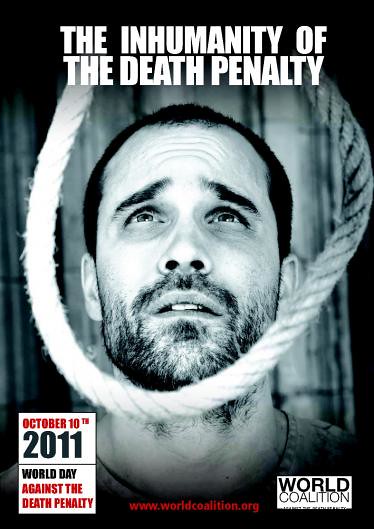
As alerted by No Right Turn, today is World Day Against the Death Penalty. This post has a couple of suggestions for things you can do regarding the four countries in the South Pacific where the death penalty is still legal, though three of those four aren't actively using the legislation and the fourth isn't enacting it - at the moment.
Though, I do note with interest that the poster used to advertise the day seems to feature a white man, though it's admittedly hard to say for sure due to the colour palette as he could be some variety of light-skinned Middle Eastern.
Money
Ben Kepes has posted a piece following on from an earlier one about major questions regarding the honesty of demolition companies working in the commercial red zone. Because of a lucky coincidence in the timelines he's able to show evidence of what seems to be a pretty bold rort on demolition costs - namely, a 400% increase from pre-February quotes. There's a couple of comments about one particular point of the breakdown, namely the waste removal charge, that may shape up to be illuminating depending how they go.
Sex
I hesitate to use the word sex despite it fitting thematically because this isn't about sex, it's about rape. Every so often I head to fmylife.com and skim through the posts. Some of them are pretty dodgy, but nothing compared to what I found when I clicked on the option to vote on submissions. From the outright statements to statutory rape (FML? FHL.) to, oh, more statutory rape, it was a rather disturbing ten minutes. Note that there were a few more that I clicked past before realising I should have capped those as well! The fact that I turned up so many of these in such a short time really suggests something about how huge a problem this is, especially when you consider that most people wouldn't post something like this on FML. (And yes, I'm aware that one or any of them could be made up, but I think that also ties in to how prominent and insidious rape culture is.)


Though for something slightly lighter, I also caught a birth control stupid.

Death
As alerted by No Right Turn, today is World Day Against the Death Penalty. This post has a couple of suggestions for things you can do regarding the four countries in the South Pacific where the death penalty is still legal, though three of those four aren't actively using the legislation and the fourth isn't enacting it - at the moment.
Though, I do note with interest that the poster used to advertise the day seems to feature a white man, though it's admittedly hard to say for sure due to the colour palette as he could be some variety of light-skinned Middle Eastern.
Friday, 30 September 2011
When consent of the governed cannot exist
The very basis of democracy is that the government is by the people, for the people, of the people. The government is supposed to act in the name of the people, with their consent - that's what the whole voting process is about. When a significant enough portion of the population votes for a party, it indicates that they approve of their policies.
But for this relationship to have any real meaning, the people must know what the government is doing. Not necessarily detailed information that is highly sensitive, but at least an overall idea - they should know what those secret parts of the government are doing, in general. A government that deliberately hides its actions from the voters cannot have consent, because the voters do not have the knowledge required to form consent.
Which is a problem for National. They have just - finally - admitted that the SAS are in a combat role in Afghanistan, which I suspect quite a lot of people were pretty sure of anyway (I was). But we weren't told. Instead we were fed the lie that they were "mentoring" and "giving aid". In the meantime, there are families in New Zealand who've had members in combat situations while the government lied about it, and presumably the SAS were not allowed to admit this.
And of course, they're still hiding the ACTA and TPPA negotiations. The only information we have on either of these treaties has been leaked, not released officially, and all of it looks bad for us. Yet, if the government signs these treaties (and they look set to sign ACTA this weekend), we will be contractually obliged to follow them, severely limiting the laws we can set in several different areas - for example, one provision that has been partially revealed could well prevent us from enacting laws to protect against the evergreening of medical patents (such as those in India).
America is a bully when it comes to copyrights. It is utterly ridiculous that an easy way to guess whether a book or movie is in copyright is to check whether it came out before Walt Disney's work, yet media corporations like Disney are essentially setting copyright laws for much of the world because of the broken political system in the US and the sycopancy of other governments.
America is a bully when it comes to medicine, too. It's a huge industry over there, with drug companies and insurance providers essentially running the entire show, and the fact that medicines can be bought here for far cheaper than they can in the US upsets them terribly. That's possible because we have Pharmac which can negotiate a decent deal for us, so they'd love for National to agree to anything that would weaken Pharmac's position - another thing rumoured to play a big part in TPPA.
And especially, America is a bully in the Middle East. At this point there are no good guys in this conflict - every side is supporting or has supported or will support at least one dictatorial regime willing to inflict horrors on its people for militarial or financial gain. We should absolutely not be encouraging it, let alone participating, yet National has put us in that situation and refuses to bring us back out of it. To suggest that it would be dishonorable to withdraw is utterly ludicrous and downright offensive. If they had any respect for the dead they would bring the still living home.
If we lived in a fair world, more voters would take National's admission of the true nature of the SAS' mission, as well as the credit rating downgrade we've just received, as reason to not re-elect them. Not that Labour is the best alternative, having just caved on the video surveillance bill, but three more years of National will only increase the death toll - not just for our soldiers, but for those driven into poverty by their failed economic policies.
But for this relationship to have any real meaning, the people must know what the government is doing. Not necessarily detailed information that is highly sensitive, but at least an overall idea - they should know what those secret parts of the government are doing, in general. A government that deliberately hides its actions from the voters cannot have consent, because the voters do not have the knowledge required to form consent.
Which is a problem for National. They have just - finally - admitted that the SAS are in a combat role in Afghanistan, which I suspect quite a lot of people were pretty sure of anyway (I was). But we weren't told. Instead we were fed the lie that they were "mentoring" and "giving aid". In the meantime, there are families in New Zealand who've had members in combat situations while the government lied about it, and presumably the SAS were not allowed to admit this.
And of course, they're still hiding the ACTA and TPPA negotiations. The only information we have on either of these treaties has been leaked, not released officially, and all of it looks bad for us. Yet, if the government signs these treaties (and they look set to sign ACTA this weekend), we will be contractually obliged to follow them, severely limiting the laws we can set in several different areas - for example, one provision that has been partially revealed could well prevent us from enacting laws to protect against the evergreening of medical patents (such as those in India).
America is a bully when it comes to copyrights. It is utterly ridiculous that an easy way to guess whether a book or movie is in copyright is to check whether it came out before Walt Disney's work, yet media corporations like Disney are essentially setting copyright laws for much of the world because of the broken political system in the US and the sycopancy of other governments.
America is a bully when it comes to medicine, too. It's a huge industry over there, with drug companies and insurance providers essentially running the entire show, and the fact that medicines can be bought here for far cheaper than they can in the US upsets them terribly. That's possible because we have Pharmac which can negotiate a decent deal for us, so they'd love for National to agree to anything that would weaken Pharmac's position - another thing rumoured to play a big part in TPPA.
And especially, America is a bully in the Middle East. At this point there are no good guys in this conflict - every side is supporting or has supported or will support at least one dictatorial regime willing to inflict horrors on its people for militarial or financial gain. We should absolutely not be encouraging it, let alone participating, yet National has put us in that situation and refuses to bring us back out of it. To suggest that it would be dishonorable to withdraw is utterly ludicrous and downright offensive. If they had any respect for the dead they would bring the still living home.
If we lived in a fair world, more voters would take National's admission of the true nature of the SAS' mission, as well as the credit rating downgrade we've just received, as reason to not re-elect them. Not that Labour is the best alternative, having just caved on the video surveillance bill, but three more years of National will only increase the death toll - not just for our soldiers, but for those driven into poverty by their failed economic policies.
Friday, 26 August 2011
'Bias' in reporting
Recently there was an article on Stuff about how John Key told the Americans back in 2008 that National couldn't make any really conservative policies because there was a socialist streak in all New Zealanders. They've now updated this news with more information - John Key has confirmed that he said that!
The article's here.
It's really not particularly interesting, and I'd seen a lot of it before, but the comments are worth a read purely for the highly contradictory nature of them. There are quite a few people bashing Stuff for their anti-National reporting... and also people bashing Stuff for their pro-National reporting. There are a lot of people saying "Well, yes, and that's awesome." But there are also some who hate it. And, of course, the few people who don't follow the journalistic style well enough to realise that only a minority of the article is Key's words, as well as the people who think that rich-bashing is a good political move.
For extra brain-ache, the poll that came up for me in the side bar was asking if I thought benefit payment cards were a good idea. In our apparently socialist country of rich-bashing, 77.2% of the respondents voted yes.
God, I'd hate to see what we'd be like if we didn't hate rich people so much!
The article's here.
It's really not particularly interesting, and I'd seen a lot of it before, but the comments are worth a read purely for the highly contradictory nature of them. There are quite a few people bashing Stuff for their anti-National reporting... and also people bashing Stuff for their pro-National reporting. There are a lot of people saying "Well, yes, and that's awesome." But there are also some who hate it. And, of course, the few people who don't follow the journalistic style well enough to realise that only a minority of the article is Key's words, as well as the people who think that rich-bashing is a good political move.
For extra brain-ache, the poll that came up for me in the side bar was asking if I thought benefit payment cards were a good idea. In our apparently socialist country of rich-bashing, 77.2% of the respondents voted yes.
God, I'd hate to see what we'd be like if we didn't hate rich people so much!
Monday, 15 August 2011
Playing with matches
The New Zealand blogosphere is all a-twitter with John Key's welfare plan for teenagers on benefits. I have some lengthy thoughts, but first I'm going to link to a video: The Intervention - Witness - Al Jazeera English
I'v already linked this a couple of times on Twitter and a week or so ago on Google+, but I think it's particularly relevant right now. It's nearly an hour long, but worth it - it covers the intervention program in Australia which took control of the incomes of Australian Aborigines in the far north of the country and the fall out from it. Obviously there are differences to what John Key is proposing - for starters we're not going to be taking away jobs that young people already have - but it's important viewing.
The thing about National is that I can't trust they've thought any of their policies through. The complete shambles of the Skynet law proved that. And that leaves me with a lot of questions about this one. What is this supposed to achieve, exactly? Are they also going to make a push to teach people budgeting skills, or are they just going to do it for them? Is there going to be room in the system for birth control, and if so, will people be able to choose the one that suits them the most or will they only have a few options? (eg, a certain dollar value a week might be good for condoms or the pill, but not an IUD, which is a cost outlay to begin with and then no more for years) What happens when something unexpected comes up that needs to be paid for - most people will sit down and make a decision, like, maybe I'll spend a bit less on food and put off paying the power bill until Tuesday. Will beneficiaries be able to do the same thing, or are they just screwed? Have they actually considered the fact that 16-17 year olds can't legally buy alcohol and cigarettes anyway, so if they're doing so it must be through a method that isn't necessarily going to be affected at all? (Note in the Intervention video, at one point a shop owner says that though he's been losing money, alcohol sales haven't changed at all. It's the food sales that suffered.)
Even aside from practicalities, I have little doubt they haven't given serious consideration to the emotional affect of something like this. In essence, we'd have people leaving high school ready to join the adult world, and then finding that if they can't get a job they have to go into this system where they're treated like small children. If we want to beat them down and humiliate them, it's probably a good policy. If we want to build resentment, it's great.
I really can't help but notice that the only people who think this is a good idea are those who think people want to be on a benefit. Look, I can't speak for everyone, but I can speak for myself. Being on a benefit is hell. For starters, your income is far less than a minimum wage full-time job would give you, and it's still less than many minimum wage part-time jobs would give you. Beyond that, though, there's the constant worry. How do you explain the gaps on your CV? In my case, how do I explain my complete lack of references even from when I was working? I had a nervous breakdown at work, and then somehow went through two more jobs before finally realising I couldn't actually keep going - as a result, I don't have anyone from back then who'd even say neutral things about me, let alone good. Most unemployed people don't have that problem, but that's another issue with this system - it treats everyone the same, when everyone is not the same. Then there's the self-blame and confusion. Am I really on this benefit because I have to be, or am I self-sabotaging? If everyone's saying this is my fault, are they right? Maybe I am just useless. Maybe I shouldn't even bother. Maybe I should just live down to their expectations. It would be easier than trying to prove myself over and over again and never, ever managing it. (In the case of teen parents, I suspect, but don't know, that this might be even more common. Society hates teen parents.)
Ultimately, this policy does nothing to address the real issues. It does nothing to create jobs. It does nothing to teach young people skills. It does nothing to give them confidence in themselves, to find their strengths, to help them realise their goals. It's just a looming dark pit, right behind them, waiting for them to make a single mis-step. Given ongoing events in the UK, given the financial crisis in Greece, given the growing inequality in New Zealand and the repeated outbreaks of preventable illnesses and the high numbers of young people without futures, this is going to do nothing but doom us. And I, for one, am terrified for the results of this election. I have no realistic hopes that Labour will beat National, but all I can do is hope that their majority is slim enough that they need a coalition - and not just with ACT.
I'v already linked this a couple of times on Twitter and a week or so ago on Google+, but I think it's particularly relevant right now. It's nearly an hour long, but worth it - it covers the intervention program in Australia which took control of the incomes of Australian Aborigines in the far north of the country and the fall out from it. Obviously there are differences to what John Key is proposing - for starters we're not going to be taking away jobs that young people already have - but it's important viewing.
The thing about National is that I can't trust they've thought any of their policies through. The complete shambles of the Skynet law proved that. And that leaves me with a lot of questions about this one. What is this supposed to achieve, exactly? Are they also going to make a push to teach people budgeting skills, or are they just going to do it for them? Is there going to be room in the system for birth control, and if so, will people be able to choose the one that suits them the most or will they only have a few options? (eg, a certain dollar value a week might be good for condoms or the pill, but not an IUD, which is a cost outlay to begin with and then no more for years) What happens when something unexpected comes up that needs to be paid for - most people will sit down and make a decision, like, maybe I'll spend a bit less on food and put off paying the power bill until Tuesday. Will beneficiaries be able to do the same thing, or are they just screwed? Have they actually considered the fact that 16-17 year olds can't legally buy alcohol and cigarettes anyway, so if they're doing so it must be through a method that isn't necessarily going to be affected at all? (Note in the Intervention video, at one point a shop owner says that though he's been losing money, alcohol sales haven't changed at all. It's the food sales that suffered.)
Even aside from practicalities, I have little doubt they haven't given serious consideration to the emotional affect of something like this. In essence, we'd have people leaving high school ready to join the adult world, and then finding that if they can't get a job they have to go into this system where they're treated like small children. If we want to beat them down and humiliate them, it's probably a good policy. If we want to build resentment, it's great.
I really can't help but notice that the only people who think this is a good idea are those who think people want to be on a benefit. Look, I can't speak for everyone, but I can speak for myself. Being on a benefit is hell. For starters, your income is far less than a minimum wage full-time job would give you, and it's still less than many minimum wage part-time jobs would give you. Beyond that, though, there's the constant worry. How do you explain the gaps on your CV? In my case, how do I explain my complete lack of references even from when I was working? I had a nervous breakdown at work, and then somehow went through two more jobs before finally realising I couldn't actually keep going - as a result, I don't have anyone from back then who'd even say neutral things about me, let alone good. Most unemployed people don't have that problem, but that's another issue with this system - it treats everyone the same, when everyone is not the same. Then there's the self-blame and confusion. Am I really on this benefit because I have to be, or am I self-sabotaging? If everyone's saying this is my fault, are they right? Maybe I am just useless. Maybe I shouldn't even bother. Maybe I should just live down to their expectations. It would be easier than trying to prove myself over and over again and never, ever managing it. (In the case of teen parents, I suspect, but don't know, that this might be even more common. Society hates teen parents.)
Ultimately, this policy does nothing to address the real issues. It does nothing to create jobs. It does nothing to teach young people skills. It does nothing to give them confidence in themselves, to find their strengths, to help them realise their goals. It's just a looming dark pit, right behind them, waiting for them to make a single mis-step. Given ongoing events in the UK, given the financial crisis in Greece, given the growing inequality in New Zealand and the repeated outbreaks of preventable illnesses and the high numbers of young people without futures, this is going to do nothing but doom us. And I, for one, am terrified for the results of this election. I have no realistic hopes that Labour will beat National, but all I can do is hope that their majority is slim enough that they need a coalition - and not just with ACT.
Thursday, 7 July 2011
Metro, a subsidiary of ECan't
It seems like most people in Ōtautahi have a story.
Not about the earthquakes - about buses. Up until last year and very early this year, I loved our bus system. It was a cheap, efficient way of getting around the city, with generally good service. Now, four and a half months after The Quake, things have changed. A friend's husband had two buses drive straight past him. My sister called me one evening after waiting two hours for a bus (the Orbiter, which should have been coming every ten minutes) asking me to cook dinner because she wouldn't be home in time. She eventually took a taxi. Route maps on the MetroInfo website change, but the actual route doesn't. Timetables seem to be merely suggestions.
This would be irritating enough as a simple matter of poor service from a company, but it's wider-reaching than that. Metro is a government-run piece of infrastructure with several goals: to provide transport for those unable to drive, to reduce road congestion, to reduce air pollution, to cut down on fossil fuel consumption. (At least, those should be the goals. Knowing the government, they might not be.) Considering how much we invest in the image of Clean Green New Zealand, the utter failure of Metro to adjust by now to conditions in post-quake Christchurch is unacceptable. If you want to persuade people to use cleaner methods of getting around, you need to have reliable cleaner methods of getting around. If people know that the bus system is basically a gamble, that your best bet is just to go to the bus stop and hope one will come past, it's going to stop being their first choice.
But then, given that permits have now been issued for fuel companies to look into lignites, I think we all know that this government has no commitment whatsoever to the environment - let alone alone to the young, old, poor or disabled that make up so much of Metro's customer base.
Not about the earthquakes - about buses. Up until last year and very early this year, I loved our bus system. It was a cheap, efficient way of getting around the city, with generally good service. Now, four and a half months after The Quake, things have changed. A friend's husband had two buses drive straight past him. My sister called me one evening after waiting two hours for a bus (the Orbiter, which should have been coming every ten minutes) asking me to cook dinner because she wouldn't be home in time. She eventually took a taxi. Route maps on the MetroInfo website change, but the actual route doesn't. Timetables seem to be merely suggestions.
This would be irritating enough as a simple matter of poor service from a company, but it's wider-reaching than that. Metro is a government-run piece of infrastructure with several goals: to provide transport for those unable to drive, to reduce road congestion, to reduce air pollution, to cut down on fossil fuel consumption. (At least, those should be the goals. Knowing the government, they might not be.) Considering how much we invest in the image of Clean Green New Zealand, the utter failure of Metro to adjust by now to conditions in post-quake Christchurch is unacceptable. If you want to persuade people to use cleaner methods of getting around, you need to have reliable cleaner methods of getting around. If people know that the bus system is basically a gamble, that your best bet is just to go to the bus stop and hope one will come past, it's going to stop being their first choice.
But then, given that permits have now been issued for fuel companies to look into lignites, I think we all know that this government has no commitment whatsoever to the environment - let alone alone to the young, old, poor or disabled that make up so much of Metro's customer base.
Monday, 4 July 2011
Te Manākitanga
It's that time of year again - Te Wiki o Te Reo Māori. Because every national language needs less than 2% of the year devoted to it! We're watching Te Kāea, which does mean that I need to actually watch the screen for the subtitles, but I'm starting to be able to pick out words more and more often.
That... isn't really enough though. We were building a place at Te Awa o Te Ora, but now that our kaiako harakeke has left the city we haven't been much, plus I've been working more. (I'm up to sixteen hours a week, which is awesome but exhausting.) As for at home, there's a reason we refer to Wednesday as Maori TV night - dad either has meetings or he and mum go to play bridge. He is... not the most Maori-friendly person, to say the least. In fact during Te Wiki last year I posted a rant about his scathing comments towards kupu pōriro like "hipi" for sheep and their authenticity. Because, you know, native languages are supposed to just freeze at the moment of contact, unlike other languages which are allowed to evolve.
At any rate, we watch Toku Reo at least once a week, more when we can, but we live in a very white world. They do say that Ōtautahi is the white supremacist capital of New Zealand. So it's difficult. But by the next census, I want to be able to tell them that I speak Te Reo. That's my goal.
I feel like I should write something eloquent, now, about the meaning behind Te Manākitanga, but honestly I kind of think "Te Manākitanga" is eloquent enough. We don't have a word that concise in English, which seems to be the way with a lot of Maori phrases. Hospitality is about the closest, but manākitanga goes both ways - respect for your hosts, being welcoming to your guests, and there is, I think, something to be said in there about the English (and bear in mind I'm using "English" as shorthand here) refer to this as something that the host does, but to Māori it's a mutual thing. We've failed that. As a collective, we have no respect for Māori, and we have to change before it's too late - because it will be. Te Reo is dying out and so are parts of the tikanga. A lot of knowledge has probably already been lost. And everything I've learned, at Te Awa o Te Ora and other places, tells me that we would be very much the worse for it.
That... isn't really enough though. We were building a place at Te Awa o Te Ora, but now that our kaiako harakeke has left the city we haven't been much, plus I've been working more. (I'm up to sixteen hours a week, which is awesome but exhausting.) As for at home, there's a reason we refer to Wednesday as Maori TV night - dad either has meetings or he and mum go to play bridge. He is... not the most Maori-friendly person, to say the least. In fact during Te Wiki last year I posted a rant about his scathing comments towards kupu pōriro like "hipi" for sheep and their authenticity. Because, you know, native languages are supposed to just freeze at the moment of contact, unlike other languages which are allowed to evolve.
At any rate, we watch Toku Reo at least once a week, more when we can, but we live in a very white world. They do say that Ōtautahi is the white supremacist capital of New Zealand. So it's difficult. But by the next census, I want to be able to tell them that I speak Te Reo. That's my goal.
I feel like I should write something eloquent, now, about the meaning behind Te Manākitanga, but honestly I kind of think "Te Manākitanga" is eloquent enough. We don't have a word that concise in English, which seems to be the way with a lot of Maori phrases. Hospitality is about the closest, but manākitanga goes both ways - respect for your hosts, being welcoming to your guests, and there is, I think, something to be said in there about the English (and bear in mind I'm using "English" as shorthand here) refer to this as something that the host does, but to Māori it's a mutual thing. We've failed that. As a collective, we have no respect for Māori, and we have to change before it's too late - because it will be. Te Reo is dying out and so are parts of the tikanga. A lot of knowledge has probably already been lost. And everything I've learned, at Te Awa o Te Ora and other places, tells me that we would be very much the worse for it.
Subscribe to:
Posts (Atom)