Things are carrying on here, with another 5.5 quake last night and a new water conservation method in my household - making sure to run the shower into a bucket while it's warming. Heading into the summer with restrictions in place, after the rocky months we've had, is a little worrying for so many people who've taken the quality of our water for granted.
Money
Ben Kepes has posted a piece following on from an earlier one about major questions regarding the honesty of demolition companies working in the commercial red zone. Because of a lucky coincidence in the timelines he's able to show evidence of what seems to be a pretty bold rort on demolition costs - namely, a 400% increase from pre-February quotes. There's a couple of comments about one particular point of the breakdown, namely the waste removal charge, that may shape up to be illuminating depending how they go.
Sex
I hesitate to use the word sex despite it fitting thematically because this isn't about sex, it's about rape. Every so often I head to fmylife.com and skim through the posts. Some of them are pretty dodgy, but nothing compared to what I found when I clicked on the option to vote on submissions. From the outright statements to statutory rape (FML? FHL.) to, oh, more statutory rape, it was a rather disturbing ten minutes. Note that there were a few more that I clicked past before realising I should have capped those as well! The fact that I turned up so many of these in such a short time really suggests something about how huge a problem this is, especially when you consider that most people wouldn't post something like this on FML. (And yes, I'm aware that one or any of them could be made up, but I think that also ties in to how prominent and insidious rape culture is.)
Though for something slightly lighter, I also caught a birth control stupid.
Death
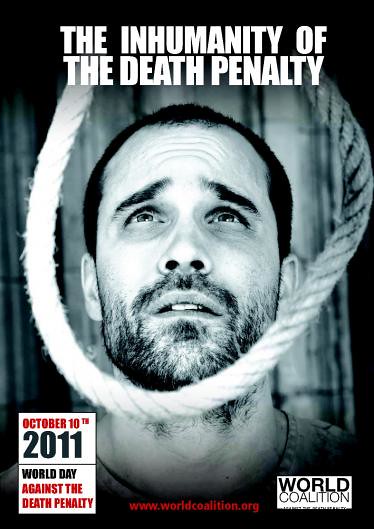
As alerted by No Right Turn, today is World Day Against the Death Penalty. This post has a couple of suggestions for things you can do regarding the four countries in the South Pacific where the death penalty is still legal, though three of those four aren't actively using the legislation and the fourth isn't enacting it - at the moment.
Though, I do note with interest that the poster used to advertise the day seems to feature a white man, though it's admittedly hard to say for sure due to the colour palette as he could be some variety of light-skinned Middle Eastern.
Showing posts with label justice. Show all posts
Showing posts with label justice. Show all posts
Monday, 10 October 2011


Friday, 7 October 2011
Tax is good
I'm sure I'm not the only one who played SimCity as a kid(/teen/adult). My usual version was 2000 and the bane of my existence was tax. You usually had it set around 7-8%, because when you put it up people booed and left town, and if you put it lower you couldn't pay for anything. I loved all the little social good programs you could institute, so paying for things was an ongoing problem. Like all good politicians, I solved this by putting it higher than I intended, then lowering it again to trick my people into thinking I'd caved.
In the real world, people have other solutions. In Kansas, the Topeka City Council is struggling with having to pay to prosecute crimes that last month Shawnee County decided were too expensive to deal with and shunted onto local councils. The cases involved are misdemeanours, including domestic battery.
Faced with the reality that you have to spend money to punish criminals, Topeka has come up with the obvious answer: stop punishing them. It will be voting next week on whether to repeal the ban on domestic battery, rendering it not technically legal, but not something that will be actively prosecuted either.
This is pretty solid evidence that austerity is a bad plan, especially considering that most of those who espouse it also try to be seen as tough on crime. In New Zealand the government is essentially paying companies to pollute; in America, tax deferments mean that corporations are operating under a tax rate of 0%, or less. The richest are avoiding paying their share, and everyone else is paying it for them.
In the real world, people have other solutions. In Kansas, the Topeka City Council is struggling with having to pay to prosecute crimes that last month Shawnee County decided were too expensive to deal with and shunted onto local councils. The cases involved are misdemeanours, including domestic battery.
Faced with the reality that you have to spend money to punish criminals, Topeka has come up with the obvious answer: stop punishing them. It will be voting next week on whether to repeal the ban on domestic battery, rendering it not technically legal, but not something that will be actively prosecuted either.
This is pretty solid evidence that austerity is a bad plan, especially considering that most of those who espouse it also try to be seen as tough on crime. In New Zealand the government is essentially paying companies to pollute; in America, tax deferments mean that corporations are operating under a tax rate of 0%, or less. The richest are avoiding paying their share, and everyone else is paying it for them.
Friday, 30 September 2011
When consent of the governed cannot exist
The very basis of democracy is that the government is by the people, for the people, of the people. The government is supposed to act in the name of the people, with their consent - that's what the whole voting process is about. When a significant enough portion of the population votes for a party, it indicates that they approve of their policies.
But for this relationship to have any real meaning, the people must know what the government is doing. Not necessarily detailed information that is highly sensitive, but at least an overall idea - they should know what those secret parts of the government are doing, in general. A government that deliberately hides its actions from the voters cannot have consent, because the voters do not have the knowledge required to form consent.
Which is a problem for National. They have just - finally - admitted that the SAS are in a combat role in Afghanistan, which I suspect quite a lot of people were pretty sure of anyway (I was). But we weren't told. Instead we were fed the lie that they were "mentoring" and "giving aid". In the meantime, there are families in New Zealand who've had members in combat situations while the government lied about it, and presumably the SAS were not allowed to admit this.
And of course, they're still hiding the ACTA and TPPA negotiations. The only information we have on either of these treaties has been leaked, not released officially, and all of it looks bad for us. Yet, if the government signs these treaties (and they look set to sign ACTA this weekend), we will be contractually obliged to follow them, severely limiting the laws we can set in several different areas - for example, one provision that has been partially revealed could well prevent us from enacting laws to protect against the evergreening of medical patents (such as those in India).
America is a bully when it comes to copyrights. It is utterly ridiculous that an easy way to guess whether a book or movie is in copyright is to check whether it came out before Walt Disney's work, yet media corporations like Disney are essentially setting copyright laws for much of the world because of the broken political system in the US and the sycopancy of other governments.
America is a bully when it comes to medicine, too. It's a huge industry over there, with drug companies and insurance providers essentially running the entire show, and the fact that medicines can be bought here for far cheaper than they can in the US upsets them terribly. That's possible because we have Pharmac which can negotiate a decent deal for us, so they'd love for National to agree to anything that would weaken Pharmac's position - another thing rumoured to play a big part in TPPA.
And especially, America is a bully in the Middle East. At this point there are no good guys in this conflict - every side is supporting or has supported or will support at least one dictatorial regime willing to inflict horrors on its people for militarial or financial gain. We should absolutely not be encouraging it, let alone participating, yet National has put us in that situation and refuses to bring us back out of it. To suggest that it would be dishonorable to withdraw is utterly ludicrous and downright offensive. If they had any respect for the dead they would bring the still living home.
If we lived in a fair world, more voters would take National's admission of the true nature of the SAS' mission, as well as the credit rating downgrade we've just received, as reason to not re-elect them. Not that Labour is the best alternative, having just caved on the video surveillance bill, but three more years of National will only increase the death toll - not just for our soldiers, but for those driven into poverty by their failed economic policies.
But for this relationship to have any real meaning, the people must know what the government is doing. Not necessarily detailed information that is highly sensitive, but at least an overall idea - they should know what those secret parts of the government are doing, in general. A government that deliberately hides its actions from the voters cannot have consent, because the voters do not have the knowledge required to form consent.
Which is a problem for National. They have just - finally - admitted that the SAS are in a combat role in Afghanistan, which I suspect quite a lot of people were pretty sure of anyway (I was). But we weren't told. Instead we were fed the lie that they were "mentoring" and "giving aid". In the meantime, there are families in New Zealand who've had members in combat situations while the government lied about it, and presumably the SAS were not allowed to admit this.
And of course, they're still hiding the ACTA and TPPA negotiations. The only information we have on either of these treaties has been leaked, not released officially, and all of it looks bad for us. Yet, if the government signs these treaties (and they look set to sign ACTA this weekend), we will be contractually obliged to follow them, severely limiting the laws we can set in several different areas - for example, one provision that has been partially revealed could well prevent us from enacting laws to protect against the evergreening of medical patents (such as those in India).
America is a bully when it comes to copyrights. It is utterly ridiculous that an easy way to guess whether a book or movie is in copyright is to check whether it came out before Walt Disney's work, yet media corporations like Disney are essentially setting copyright laws for much of the world because of the broken political system in the US and the sycopancy of other governments.
America is a bully when it comes to medicine, too. It's a huge industry over there, with drug companies and insurance providers essentially running the entire show, and the fact that medicines can be bought here for far cheaper than they can in the US upsets them terribly. That's possible because we have Pharmac which can negotiate a decent deal for us, so they'd love for National to agree to anything that would weaken Pharmac's position - another thing rumoured to play a big part in TPPA.
And especially, America is a bully in the Middle East. At this point there are no good guys in this conflict - every side is supporting or has supported or will support at least one dictatorial regime willing to inflict horrors on its people for militarial or financial gain. We should absolutely not be encouraging it, let alone participating, yet National has put us in that situation and refuses to bring us back out of it. To suggest that it would be dishonorable to withdraw is utterly ludicrous and downright offensive. If they had any respect for the dead they would bring the still living home.
If we lived in a fair world, more voters would take National's admission of the true nature of the SAS' mission, as well as the credit rating downgrade we've just received, as reason to not re-elect them. Not that Labour is the best alternative, having just caved on the video surveillance bill, but three more years of National will only increase the death toll - not just for our soldiers, but for those driven into poverty by their failed economic policies.
Saturday, 24 September 2011
Enough hypocrisy to go around
One of the articles I read this morning when I got to work was about a walkout at the UN after the Iranian President, Mahmoud Ahmadinejad, made a speech criticising the US. The article was quick to point out the hypocrisy of the speech, coming from the leader of a country whose last election was highly questionable, where protests are crushed by the military and where there is a great deal of political unrest. It also makes much of the conspiracy theories, such as the claim that most Americans and most outside the US as well believe that 9/11 was staged to ensure the survival of Jerusalem. There seemed to be a fairly decent amount about Zionist conspiracies.
But then near the bottom, Philippe Bolopion (Human Rights Watch's UN director) gives us this with no apparent sense of irony:
"The world assembly should take with a grain of salt the remarks of a leader who said nothing about the public hanging yesterday of a 17-year-old in his own country," he said.
I'm sure everyone knows what I'm getting at with this, but on the off-chance that sometime in the future someone comes across it and can't recall, yesterday also happened to be the day that Troy Davis was executed in Georgia (the US state) despite seven out of nine witnesses recanting and alleging police pressure*, one of the two remaining witnesses being a primary alternate suspect, and three jurors saying that they would change their votes if they could do it again. As far as I'm aware, Obama has made no comment on this.
(*another source I read said ten witnesses had signed affidavits recanting - either way, it is a considerable number)
Ahmadinejad's speech pitted the poverty and unhappiness of most countries against the riches and power of the US and unnamed European nations that he accused of perpetuating wars, causing the current global economic crisis and infringing on "the rights and sovereignty of nations."
He attacked the United States and European colonial powers for abducting tens of millions of Africans and making them slaves, for their readiness "to drop thousands of bombs on other countries," and for dominating the UN Security Council He singled out the US for using a nuclear bomb against Japan in World War II and imposing and supporting military dictatorships and totalitarian regimes in Asia, Africa and Latin America.
"It is as lucid as daylight that the same slave masters and colonial powers that once instigated the two world wars have caused widespread misery and disorder with far-reaching effects across the globe since then," Ahmadinejad said. "Do these arrogant powers really have the competence and ability to run or govern the world?"
Honestly, he may be a complete douche, but I can't say he's entirely wrong here. I do note that there is plenty of poverty and unhappiness in the US and other Western countries as well, of course, this isn't an East-West divide, and I doubt that Iran would do any better if it were suddenly put into a position of global power. But that doesn't make his criticism automatically invalid. And this isn't all distant past, either. There are plenty of people alive who remember WWII, and the propping up of dictatorships is still going on today. It's been a few hours since the House of Representatives cut off a bill that would have continued funding the government past the end of the month, which is a pretty huge deal for the economy of, you know, the world, and it was only a day or two ago too that Obama tried to convince the Palestinians not to approach the UN with a request to become a member state, which unless there's some kind of sudden death double or nothing clause I'm not aware of is not actually going to cost them that much even if it's a no, so I can only assume the only advantage in them not asking is that the chance of it actually happening is vastly decreased.
And really, next to the funding and support of dictators and other such meddling in outright wars for people's very existence, I don't exactly feel right getting into new information about their demands in treaty negotiations. We'll just leave it at: the US does not inspire happy feelings in me, and it's disappointing that it was Ahmadinejad who brought this up simply because he's so easy to dismiss.
But then near the bottom, Philippe Bolopion (Human Rights Watch's UN director) gives us this with no apparent sense of irony:
"The world assembly should take with a grain of salt the remarks of a leader who said nothing about the public hanging yesterday of a 17-year-old in his own country," he said.
I'm sure everyone knows what I'm getting at with this, but on the off-chance that sometime in the future someone comes across it and can't recall, yesterday also happened to be the day that Troy Davis was executed in Georgia (the US state) despite seven out of nine witnesses recanting and alleging police pressure*, one of the two remaining witnesses being a primary alternate suspect, and three jurors saying that they would change their votes if they could do it again. As far as I'm aware, Obama has made no comment on this.
(*another source I read said ten witnesses had signed affidavits recanting - either way, it is a considerable number)
Ahmadinejad's speech pitted the poverty and unhappiness of most countries against the riches and power of the US and unnamed European nations that he accused of perpetuating wars, causing the current global economic crisis and infringing on "the rights and sovereignty of nations."
He attacked the United States and European colonial powers for abducting tens of millions of Africans and making them slaves, for their readiness "to drop thousands of bombs on other countries," and for dominating the UN Security Council He singled out the US for using a nuclear bomb against Japan in World War II and imposing and supporting military dictatorships and totalitarian regimes in Asia, Africa and Latin America.
"It is as lucid as daylight that the same slave masters and colonial powers that once instigated the two world wars have caused widespread misery and disorder with far-reaching effects across the globe since then," Ahmadinejad said. "Do these arrogant powers really have the competence and ability to run or govern the world?"
Honestly, he may be a complete douche, but I can't say he's entirely wrong here. I do note that there is plenty of poverty and unhappiness in the US and other Western countries as well, of course, this isn't an East-West divide, and I doubt that Iran would do any better if it were suddenly put into a position of global power. But that doesn't make his criticism automatically invalid. And this isn't all distant past, either. There are plenty of people alive who remember WWII, and the propping up of dictatorships is still going on today. It's been a few hours since the House of Representatives cut off a bill that would have continued funding the government past the end of the month, which is a pretty huge deal for the economy of, you know, the world, and it was only a day or two ago too that Obama tried to convince the Palestinians not to approach the UN with a request to become a member state, which unless there's some kind of sudden death double or nothing clause I'm not aware of is not actually going to cost them that much even if it's a no, so I can only assume the only advantage in them not asking is that the chance of it actually happening is vastly decreased.
And really, next to the funding and support of dictators and other such meddling in outright wars for people's very existence, I don't exactly feel right getting into new information about their demands in treaty negotiations. We'll just leave it at: the US does not inspire happy feelings in me, and it's disappointing that it was Ahmadinejad who brought this up simply because he's so easy to dismiss.
Thursday, 8 September 2011
Institutional racism
This came up on Twitter yesterday after Margaret Mutu's comments, and while I love Twitter, the format is not good for serious discussions and explanations like this. A couple of people were curious so I'm going to expand on what I was saying to make it a bit clearer.
First off, I'm no expert on this. I'm white, I don't have to live with it, this is stuff I've learned from reading and speaking with people who do. Specific to New Zealand your best bet is to ask a Maori person (or other POC but Maori and Pacific Islanders tend to be the worst off, particularly Maori) if they'd mind explaining to you the slightly more subtle ways they experience discrimination, and not argue with them if they say no or you don't like what they say.
Meanwhile:
The problem with discussions like this is that there is more than one definition of racism. It means hugely different things to different people, where some think of it as only deliberate acts of hatred and others think of it as a wider system of unconscious values and ideals that works to disadvantage particular populations. The definition I use is one that was explained to me which is a sociological, academic concept of racism as POWER + PREJUDICE. A brown person can hate a white person or a Chinese person and a Japanese person living in a Western country (where neither of them have power) can hate each other, but they are not the socially advantaged group, so it's racial prejudice on an individual level rather than the usually far more damaging institutional kind.
Now, when I talk about power, this doesn't mean that everyone in that group is going to be well off. White people can be poor and marginalised. A white, mentally ill woman who's a sex worker and single mother is not going to be a very celebrated person - but she will be better regarded than a Maori mentally ill woman who's a sex worker and single mother. That's the key, that two people in the same situation have different possible outcomes solely due to their (perceived) race. And when I talk about institutionalised, that means it's not all deliberate actions by bigoted people. For example, in the US you'll get a different sentence for crack cocaine and powder cocaine, despite the fact that they're essentially exactly the same thing, because crack cocaine was viewed as more harmful and more addictive (a later study found that they have about the same level of addictiveness, among other things). Originally, the ratio was 100:1, with a mandatory minimum sentence of five years for possession of crack. Incidentally, crack users are more likely to be black. Obviously the result is a law that adds to the incredibly disproportionate numbers of black people in prisons. And even within that framework blacks are more heavily targeted - a 1995 study identified users as 52% white and 38% black, but those charged with crimes related to the use of crack were 88% black and 4% white.
Putting black people in prison was not the goal of the original law (probably), which means that by the strictest definition it wouldn't be racist. But the idea that crack is more harmful could have been influenced by unconscious racial views towards the black users of crack, and even if it was all a complete coincidence, it still had a terrible effect on the black population which would fall into the broader definition of racism.
A site I really like is Micro Aggressions. It's a tumblr that has dozens and dozens of tiny little stories, some of them only a couple of sentences, submitted by people who are marginalised. If you read one, it's rarely a "big deal". But the point is that there isn't just one. There's a lot of them. They're things that happen all the time, and that's really draining (speaking as a mentally ill queer person perceived as female, here). So when you live in a society where policy and law inadvertently discriminate against you and where the majority population* doesn't value or understand you, there isn't necessarily any recourse, because if you complain about something, the person with power has no idea of the context. They don't see the micro aggressions that the discriminated against person does. While I've learned from books and essays and blogs and conversations a lot of the ways racism operates towards Maori in New Zealand, I can't fully understand it because I'm still missing most of the picture.
What I do know, though, is that I'm unwilling to condemn a Maori woman for expressing reserve about white immigrants. I think that quotas won't work because the prejudices are already ingrained here too strongly, but I'm not going to argue with her basic premise, and I'm not going to pretend that her attitude damages me, because she lacks the institutionalised power to impact on my life in any way whatsoever. Let's face it - there's a reason she feels that way. Expecting POC not to feel that way is, frankly, a little irrational, considering everything.
First off, I'm no expert on this. I'm white, I don't have to live with it, this is stuff I've learned from reading and speaking with people who do. Specific to New Zealand your best bet is to ask a Maori person (or other POC but Maori and Pacific Islanders tend to be the worst off, particularly Maori) if they'd mind explaining to you the slightly more subtle ways they experience discrimination, and not argue with them if they say no or you don't like what they say.
Meanwhile:
The problem with discussions like this is that there is more than one definition of racism. It means hugely different things to different people, where some think of it as only deliberate acts of hatred and others think of it as a wider system of unconscious values and ideals that works to disadvantage particular populations. The definition I use is one that was explained to me which is a sociological, academic concept of racism as POWER + PREJUDICE. A brown person can hate a white person or a Chinese person and a Japanese person living in a Western country (where neither of them have power) can hate each other, but they are not the socially advantaged group, so it's racial prejudice on an individual level rather than the usually far more damaging institutional kind.
Now, when I talk about power, this doesn't mean that everyone in that group is going to be well off. White people can be poor and marginalised. A white, mentally ill woman who's a sex worker and single mother is not going to be a very celebrated person - but she will be better regarded than a Maori mentally ill woman who's a sex worker and single mother. That's the key, that two people in the same situation have different possible outcomes solely due to their (perceived) race. And when I talk about institutionalised, that means it's not all deliberate actions by bigoted people. For example, in the US you'll get a different sentence for crack cocaine and powder cocaine, despite the fact that they're essentially exactly the same thing, because crack cocaine was viewed as more harmful and more addictive (a later study found that they have about the same level of addictiveness, among other things). Originally, the ratio was 100:1, with a mandatory minimum sentence of five years for possession of crack. Incidentally, crack users are more likely to be black. Obviously the result is a law that adds to the incredibly disproportionate numbers of black people in prisons. And even within that framework blacks are more heavily targeted - a 1995 study identified users as 52% white and 38% black, but those charged with crimes related to the use of crack were 88% black and 4% white.
Putting black people in prison was not the goal of the original law (probably), which means that by the strictest definition it wouldn't be racist. But the idea that crack is more harmful could have been influenced by unconscious racial views towards the black users of crack, and even if it was all a complete coincidence, it still had a terrible effect on the black population which would fall into the broader definition of racism.
A site I really like is Micro Aggressions. It's a tumblr that has dozens and dozens of tiny little stories, some of them only a couple of sentences, submitted by people who are marginalised. If you read one, it's rarely a "big deal". But the point is that there isn't just one. There's a lot of them. They're things that happen all the time, and that's really draining (speaking as a mentally ill queer person perceived as female, here). So when you live in a society where policy and law inadvertently discriminate against you and where the majority population* doesn't value or understand you, there isn't necessarily any recourse, because if you complain about something, the person with power has no idea of the context. They don't see the micro aggressions that the discriminated against person does. While I've learned from books and essays and blogs and conversations a lot of the ways racism operates towards Maori in New Zealand, I can't fully understand it because I'm still missing most of the picture.
What I do know, though, is that I'm unwilling to condemn a Maori woman for expressing reserve about white immigrants. I think that quotas won't work because the prejudices are already ingrained here too strongly, but I'm not going to argue with her basic premise, and I'm not going to pretend that her attitude damages me, because she lacks the institutionalised power to impact on my life in any way whatsoever. Let's face it - there's a reason she feels that way. Expecting POC not to feel that way is, frankly, a little irrational, considering everything.
Tuesday, 30 August 2011
@johnkeypm can I borrow a fiver?
Two things today, and I'll start with the moderately more lighthearted one. I'll be headed to the National party welcoming committee on Monday (and hope plenty of other people will too!) and I'm pondering signs. My sister suggests "STFU & GTFO" for the pure simplicity, but I'd like to come up with several over the week so I can choose between them and then actually make the damn thing on Sunday. (Due to the news of my impending $1000 dentist's bill and being given the opportunity to do my raranga two days a week instead of one during September I don't think I can afford to take Monday morning off.) I'm tempted by "dude, where's my economy?", "not going anywhere (coz we can't afford to leave)", "TIA is MIA"... I think the last time I had to come up with a good slogan was during the teacher/student strikes in 2002.
Less jovially, police are still telling women not to go out without an escort. In New Zealand. Only at night time, though! I guess it's fine during the day, but damn, once that sun goes down you ladies had better make sure you have a male family member with you and your ankles covered or you're gonna get raped.
Except, probably not, since stranger rape is by far the least common kind, but if you do it's your fault. You should have been at home with your male acquaintances to protect you. You know, where most rapes happen.
Less jovially, police are still telling women not to go out without an escort. In New Zealand. Only at night time, though! I guess it's fine during the day, but damn, once that sun goes down you ladies had better make sure you have a male family member with you and your ankles covered or you're gonna get raped.
Except, probably not, since stranger rape is by far the least common kind, but if you do it's your fault. You should have been at home with your male acquaintances to protect you. You know, where most rapes happen.
Wednesday, 17 August 2011
Steal bottled water, sentenced to be thrown on the streets
At a certain point, any civilised society should ask itself what the purpose of the justice system is - rehabilitation, or revenge? So many of the dominant Western countries, though, seem excessively confused on this simple question. I suspect that most clashes over the relative length of prison sentences arise over a difference of opinion here. Personally, it seems to me that the only rational answer in both a social and a financial sense is that it should be for rehabilitation, but lawmakers tend to consider the general population to be a bloodthirsty lot - often not without reason. And it's far easier to appear to be tough on crime by increasing punishments than to fix the problems before the crimes happen.
When I was a small child, I read a lot, and learned somewhere that in about the 1600s in London, you could be executed for stealing a shilling. Now, I don't think that that was the norm. Sure, it probably happened, especially if the thief happened to belong to a minority that was not socially acceptable at the time, but I don't think the big book of law and punishments actually listed execution as a stock standard sentence for that crime. But that leads to the question: In 500 years, what will children learn about us?
It's not just the riots in the UK, though John Cameron's talk about having offenders evicted and cutting benefits to all of them, not just those jailed, as well as targeting families, is pretty disturbing. Especially when you consider that there have been people arrested for stealing not just minor items, but minor items generally classified as necessities (and in at least one case for receiving a minor item). As media becomes more personalised with the internet, as economies become more and more divisive and unequal, there have been an awful lot of pretty disturbing stories about the punishments poor people have been getting. Among some highly publicised ones have been a man stealing $1 from a bank to get healthcare in jail, another stealing $100 to get into detox, then feeling remorseful and turning himself in and being hit with a fifteen year sentence, at least two homeless mothers claiming a false address to get their children into school who apparently need to be made examples of - how dare they think children are entitled to an education? - and, somewhat related, mothers having newborn babies being taken away after eating poppy seeds skewed the results of the "standard" opiate tests given to women giving birth in Philidelphia. (I don't mean to pick on the US with these - because it's so dominant and has such a large population, most of the most publicised cases tend to come from there. Certainly the class warfare in other countries is often just as bad.)
Put simply, most criminals are not exactly ruthless sociopaths. The risk of reoffending for a huge number of them is actually ridiculously low, especially once they've been faced with jail and thus been shown that their actions are taken seriously. Some people do need to be put away for life, of course; Clayton Weatherston, for example, is highly unlikely to ever be safely released, based on his behaviour during the trial which seemed to show a massive disconnect between reality and how he viewed it. But for others, the risk of reoffending only exists because they are forced to it - while for some who never see the inside of a police station, let alone jail, the risk of reoffending is extremely high because society will tolerate criminal behaviour, as long as it doesn't step outside acceptable lines. Date rape? Totally okay. Business fraud on a massive scale? Not exactly desirable, but you're such a nice white man, so prominent in the community, so you just get a slap on the wrist. Forcing people to acknowledge poverty? LOCK THAT SHIT DOWN. And dear god, don't even think about daring to be poor if you're black!
When I was a small child, I read a lot, and learned somewhere that in about the 1600s in London, you could be executed for stealing a shilling. Now, I don't think that that was the norm. Sure, it probably happened, especially if the thief happened to belong to a minority that was not socially acceptable at the time, but I don't think the big book of law and punishments actually listed execution as a stock standard sentence for that crime. But that leads to the question: In 500 years, what will children learn about us?
It's not just the riots in the UK, though John Cameron's talk about having offenders evicted and cutting benefits to all of them, not just those jailed, as well as targeting families, is pretty disturbing. Especially when you consider that there have been people arrested for stealing not just minor items, but minor items generally classified as necessities (and in at least one case for receiving a minor item). As media becomes more personalised with the internet, as economies become more and more divisive and unequal, there have been an awful lot of pretty disturbing stories about the punishments poor people have been getting. Among some highly publicised ones have been a man stealing $1 from a bank to get healthcare in jail, another stealing $100 to get into detox, then feeling remorseful and turning himself in and being hit with a fifteen year sentence, at least two homeless mothers claiming a false address to get their children into school who apparently need to be made examples of - how dare they think children are entitled to an education? - and, somewhat related, mothers having newborn babies being taken away after eating poppy seeds skewed the results of the "standard" opiate tests given to women giving birth in Philidelphia. (I don't mean to pick on the US with these - because it's so dominant and has such a large population, most of the most publicised cases tend to come from there. Certainly the class warfare in other countries is often just as bad.)
Put simply, most criminals are not exactly ruthless sociopaths. The risk of reoffending for a huge number of them is actually ridiculously low, especially once they've been faced with jail and thus been shown that their actions are taken seriously. Some people do need to be put away for life, of course; Clayton Weatherston, for example, is highly unlikely to ever be safely released, based on his behaviour during the trial which seemed to show a massive disconnect between reality and how he viewed it. But for others, the risk of reoffending only exists because they are forced to it - while for some who never see the inside of a police station, let alone jail, the risk of reoffending is extremely high because society will tolerate criminal behaviour, as long as it doesn't step outside acceptable lines. Date rape? Totally okay. Business fraud on a massive scale? Not exactly desirable, but you're such a nice white man, so prominent in the community, so you just get a slap on the wrist. Forcing people to acknowledge poverty? LOCK THAT SHIT DOWN. And dear god, don't even think about daring to be poor if you're black!
Subscribe to:
Posts (Atom)